
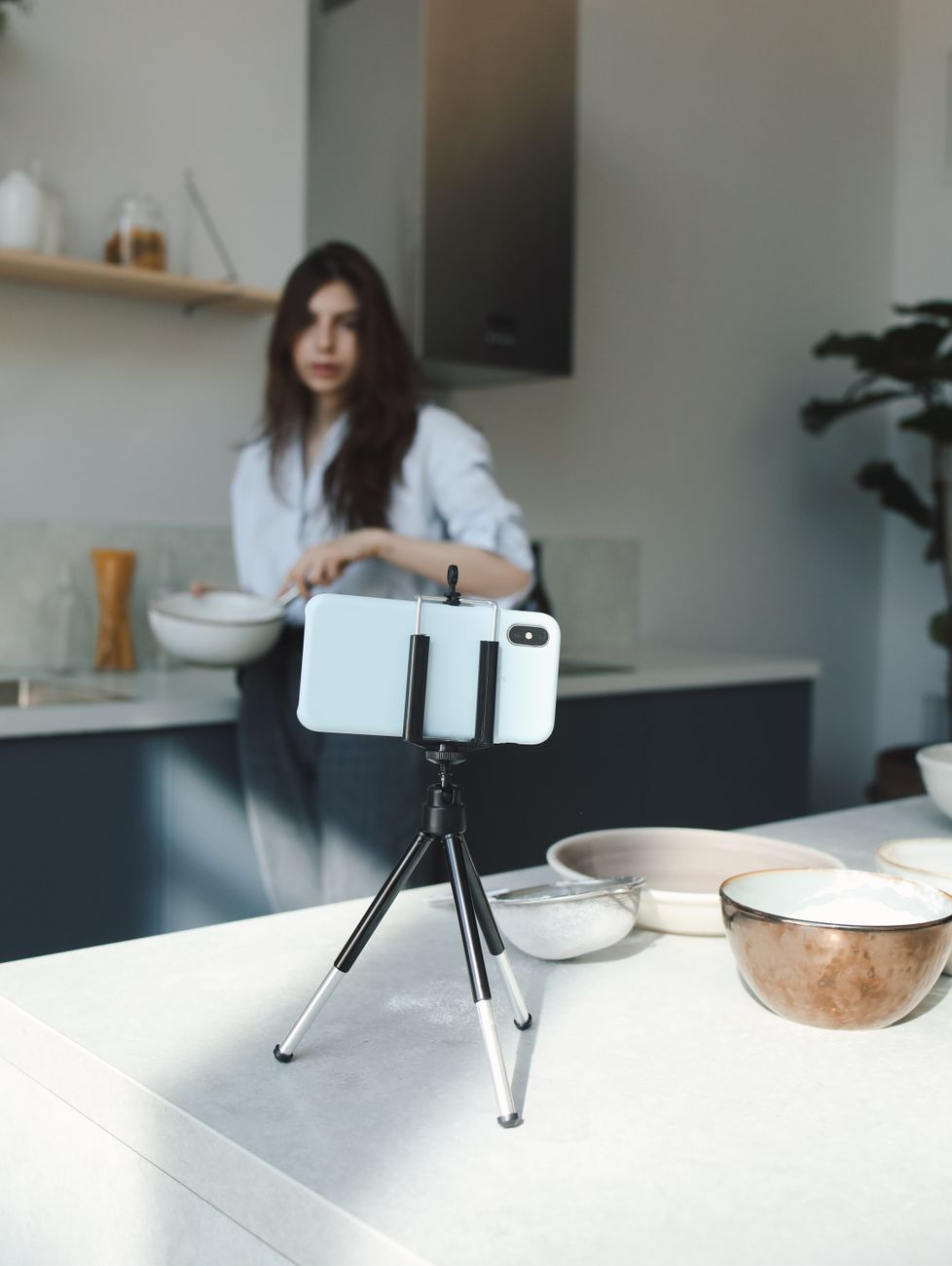
Your phone can be the place where you create your first paid piece of content. You do not need to start with a studio, a perfect feed or a huge following. You do need something useful to offer—and a plan for connecting that work to a customer.
Income is not guaranteed, and building it takes practice. Start with the equipment you already own and one small project you can finish today.
Choose how you want to get paid
Make videos for a business
A local shop might need a product demonstration, a salon might need a service walkthrough, or a small brand might need a short how-to video. You can offer the finished video for the business to use on its own channels. That is different from charging a brand to reach your followers. Shopify explains these content-income routes, including paid user-generated content, often called UGC.
Try this: pick a product you already own and make a sample that answers one real customer question. Label it as a sample; do not pretend the business hired you or endorsed your work.
Use content to sell a useful service
Show how you edit captions, organize a simple content calendar or turn a long video into short clips. Then offer one specific deliverable. “I edit three captioned vertical clips from your existing footage” is easier to understand than “I do social media.”
Recommend products through an affiliate program
If a program accepts you, qualifying purchases through your link may earn a commission under its terms. Read the eligibility, payout and return rules first. Views alone do not mean you earned money. Recommend things you can honestly discuss, and explain the relationship clearly.
Treat platform payouts as a separate, longer-term possibility. For example, YouTube’s Partner Program has eligibility and review requirements. Do not build your first income plan around an account qualifying immediately.
Your first 60 minutes: make one sample
- Minutes 0–10: choose a person and a problem. Examples: a busy parent needs a quick lunch idea, a new renter needs a cleaning tip, or a shopper wants to see how a product works. Keep the subject within what you actually know.
- Minutes 10–20: write three short lines. Name the problem, show the useful step and explain the result. Aim for a focused 20–30-second video rather than squeezing in everything you know.
- Minutes 20–35: record three shots. Clean your camera lens, face a window and move away from background noise. Capture the problem, your demonstration and the finished result. A stack of books can hold the phone steady.
- Minutes 35–50: edit on your phone. Trim dead space, add readable captions and check that text stays clear of screen edges. Listen with headphones. Use your own footage and audio you have permission to use.
- Minutes 50–60: publish or save a portfolio sample. Give it a clear title and one next step, such as “Contact me for a product-demo video.” Watch the exported version before sharing it.
Prefer to stay off camera? Film your hands, record a product demonstration or narrate a screen recording. Hide customer details, messages and account information before recording. Get permission before filming other people or their business space.
Turn the sample into a clear offer
Start with one deliverable: one edited vertical video, one agreed length, one round of revisions and a delivery date. Decide what your fee covers before you approach a buyer.
Ask where the video will appear and whether the business wants to run it as an advertisement. Agree in writing on usage rights, duration, raw footage, revisions, payment timing and approval. Work out your price from the time and costs involved; a busy project can pay poorly if unlimited changes eat up your hours.
Here is a simple pitch you can adapt: “Hi [name], I noticed customers often ask about [specific question]. I made a short sample showing [benefit]. I offer edited phone videos for small businesses. Would you like to see the sample and discuss a paid trial?”
Personalize it. Contact businesses through their published business channels, avoid repeated unwanted messages and do not promise sales results you cannot substantiate.
Make sponsorships and affiliate links clear
The FTC’s influencer guidance says to disclose material relationships, including payment or free products. Use clear wording where people will notice it. For an affiliate recommendation, “I earn a commission if you buy through this link” explains the connection. For a paid video, a clear “Ad” or sponsorship disclosure should be part of the video as well as the caption where appropriate—not hidden after a long list of hashtags. Only describe experiences you actually had.
A realistic seven-day plan
- Day 1: Finish your first sample and write your one-sentence offer.
- Days 2–3: Make two more samples around the same audience and problem.
- Day 4: Put the three samples somewhere easy to view and add a contact method.
- Day 5: Send five thoughtful, individual pitches to suitable businesses.
- Day 6: Review what people watched, saved, clicked or asked about.
- Day 7: Improve one weak point and repeat the strongest idea.
Track inquiries and paid projects alongside views. Keep a simple record of time, agreed fees, payments and expenses. Avoid offers that require you to pay to unlock a sponsorship, share your login credentials or buy equipment from a stranger.
Your first goal is small: one useful sample, one clear offer and one genuine business conversation. You can start that from the phone already in your hand.